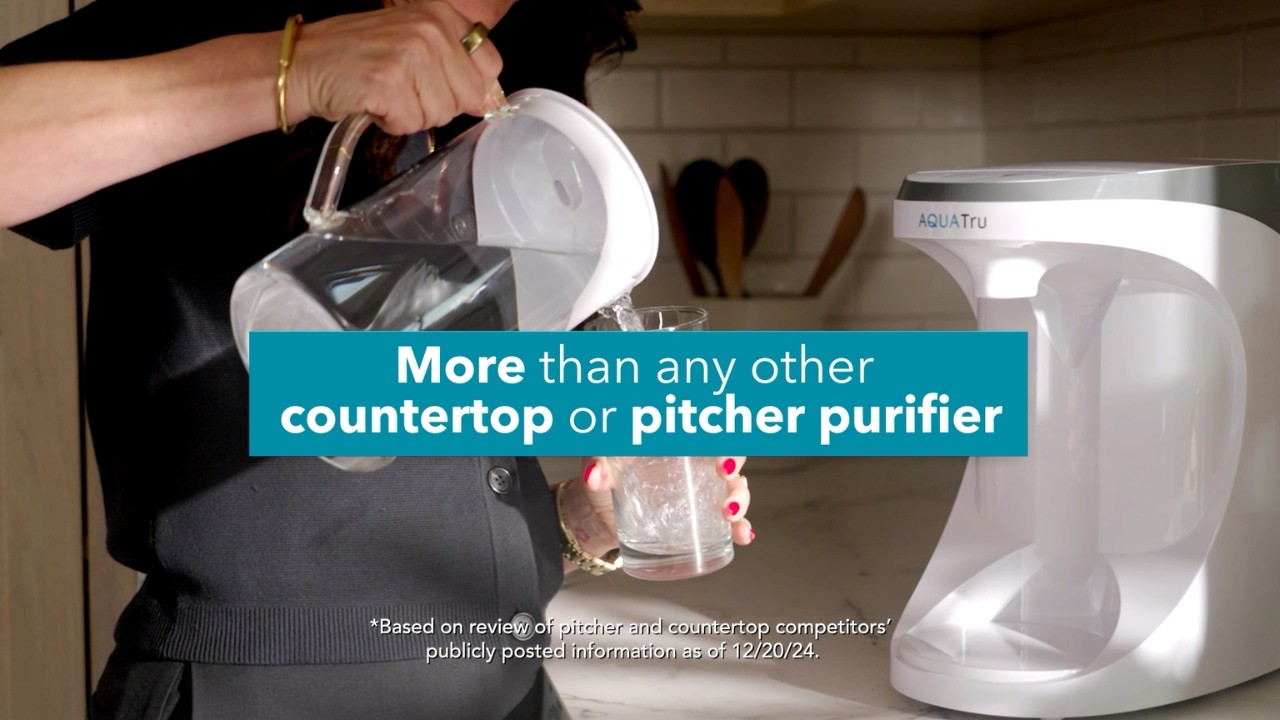
Many people rarely stop to think about the quality of the water they drink every day. It usually comes straight from the tap, maybe passes through a basic filter, and as long as it tastes normal, that’s often where the concern ends. If it seems fine, it’s assumed to be fine and life goes on. In reality, most simple water filters have fairly limited capabilities. They are primarily designed to reduce chlorine, which is why filtered water often has a cleaner, less chemical taste compared to untreated tap water. While that improvement is noticeable, it only addresses a small portion of what may actually be present in the water.
The reality is that drinking water can contain a variety of invisible contaminants. Microplastics tiny plastic fragments are increasingly found in water supplies worldwide. In addition, trace amounts of pharmaceuticals can enter water systems over time. There are also PFAS, commonly referred to as forever chemicals, which persist in the environment for long periods because they break down very slowly. Beyond these, there are many other microscopic substances that do not affect the taste, odor, or appearance of water at all. This is where systems like AquaTru take a more comprehensive filtration approach. Instead of focusing mainly on improving taste, it uses reverse osmosis technology to achieve a much deeper level of purification. Water is forced through an ultra-fine membrane that helps separate and reduce a broad range of dissolved contaminants.
The system also includes several filtration stages designed to reduce substances such as chlorine, lead, nitrates, PFAS, pharmaceuticals, and other impurities that standard filters may not fully remove. The key difference lies in the intended goal of each system. Conventional filters are generally built to make water more pleasant to drink. In contrast, AquaTru is engineered with a stronger focus on reducing as many contaminants as possible, even those that cannot be detected by taste.
Ultimately, the important point is that water does not need to look, smell, or taste bad in order to contain substances that you might still prefer to avoid consuming.
Comments
Post a Comment